The best blood tests to explain a weight loss plateau
The best blood tests to explain a weight loss plateau are TSH for your thyroid, HbA1c and fasting glucose for blood sugar, and liver, cholesterol and kidney markers for the wider picture. Together, they help rule out medical causes and catch early changes.
First, some reassurance: plateaus are normal. A review by Hall and Kahan explains why: for each kilogram you lose, you burn about 20–30 fewer calories a day, while appetite climbs by about 100 calories. So a plateau is often your body pushing back, not something going wrong.
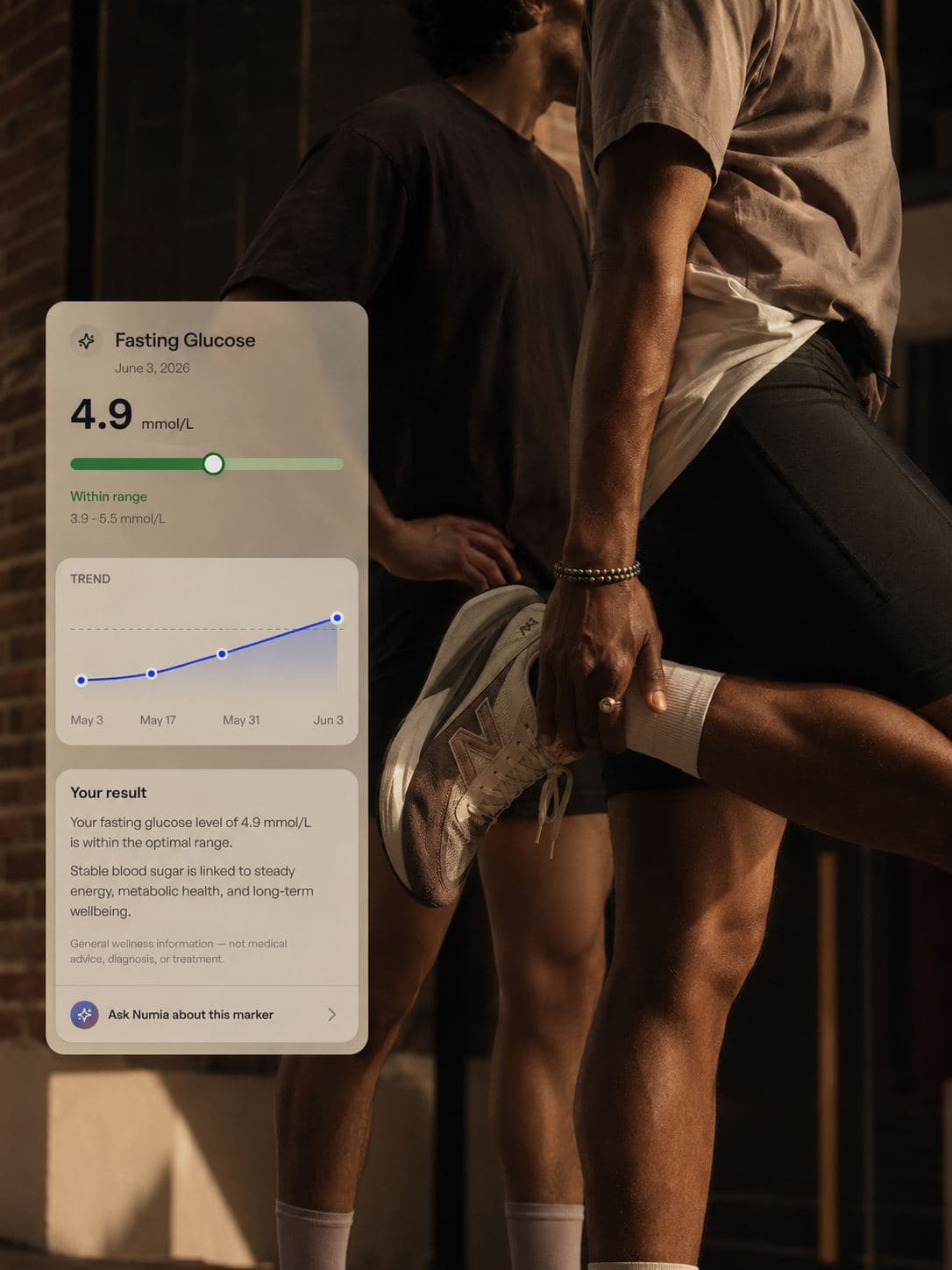
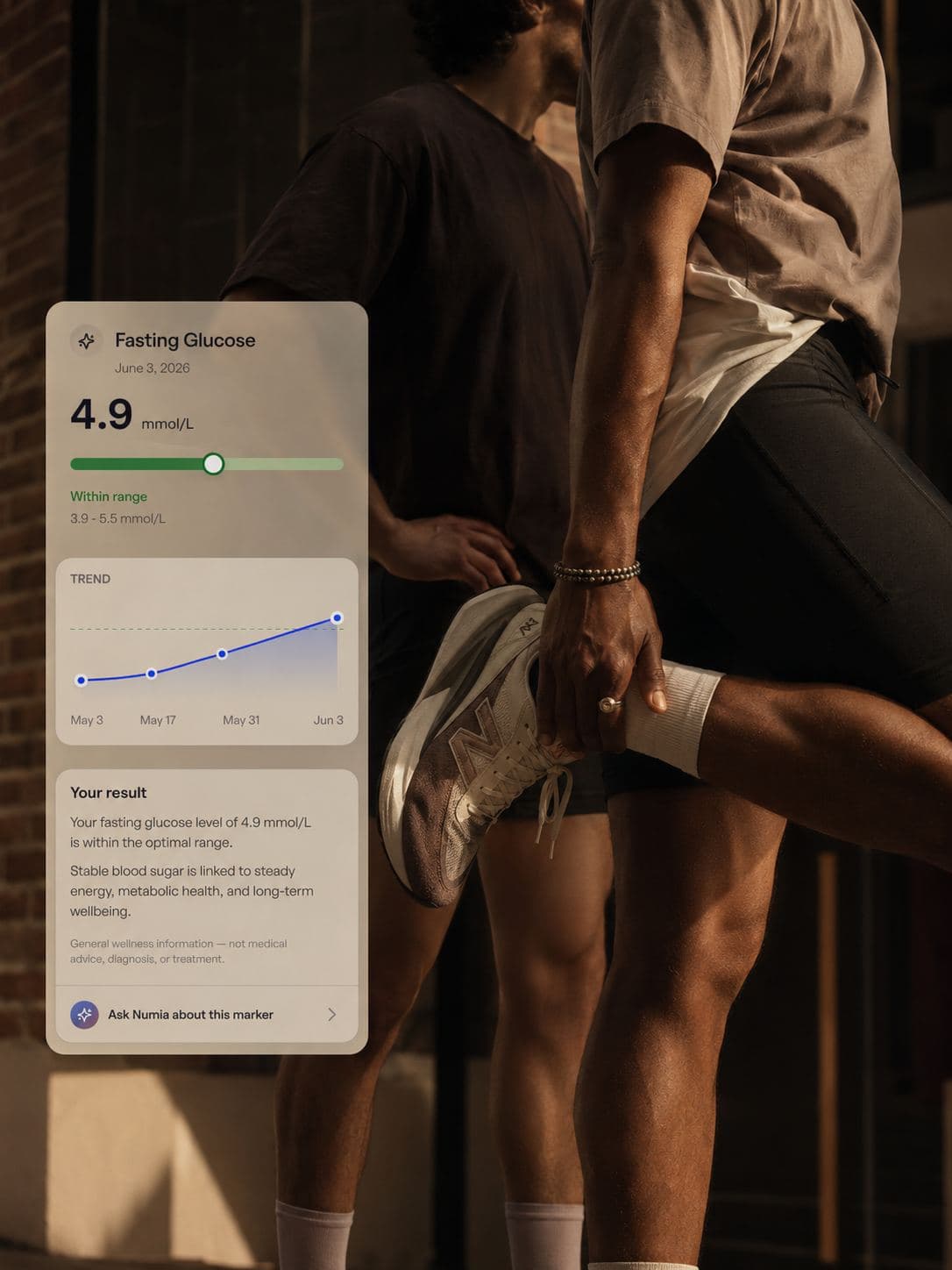
So why test? Once you've ruled out the medical side, you can focus on what's working. Numia's Weight Loss Monitoring Panel measures TSH, HbA1c and fasting glucose alongside your cholesterol, liver and kidney markers.
What can each test tell you?
| Test | What it shows |
|---|---|
| TSH | Thyroid function; high can point to an underactive thyroid |
| HbA1c, fasting glucose | Blood sugar, including the prediabetes range (HbA1c 6.0–6.4%) |
| ALT, AST, GGT | A pattern often seen with fat in the liver |
| Triglycerides, HDL | How your blood fats respond as your weight changes |
Why catch blood sugar changes early?
Prediabetes means your blood sugar is higher than normal but not yet diabetes. It usually has no symptoms, so a blood test is often the only way to see it. The good news: change at this stage works. In the Diabetes Prevention Program, people with raised blood sugar who followed a lifestyle program cut their risk of type 2 diabetes by 58% over about three years (Knowler et al., 2002).
Follow-up of the same group found more: people whose blood sugar returned to normal, even briefly, had a 56% lower diabetes risk in later years (Perreault et al., 2012). Numia's Weight Loss panel includes HbA1c each time, so you can see which way yours is heading.
Can hypothyroidism cause weight gain?
Yes, though usually less than people expect. The American Thyroid Association puts it at about 5–10 pounds, mostly salt and water rather than fat. TSH is on Numia's Weight Loss panel; if it's outside range, free T4 and free T3 are on Numia's Thyroid Basic panel.
What about insulin, cortisol and medications?
Fasting insulin and cortisol aren't part of Canada's routine obesity tests, and neither is on Numia's panel; your doctor can order them if there's a reason. Some medicines, including insulin, some antidepressants and oral steroids, can also promote weight gain. Talk to your prescriber, and don't stop anything on your own.
Where does Numia fit?
Numia puts the usual steps (appointment, requisition, lab visit, wait, follow-up) in one place. A licensed Canadian physician approves your requisition online within 24 hours, and a clinician comes to your Greater Vancouver home for a 10-minute morning draw. You get results in 7 days, in plain English in the Numia app, and out-of-range results are physician-reviewed with next steps. It's an HSA-eligible service.
Frequently asked questions
What's the best blood panel while on semaglutide or tirzepatide?
One that covers blood sugar, kidney function and electrolytes, cholesterol and liver enzymes, the core list in Canada's obesity guideline. Numia's Weight Loss panel includes all four. How often to retest is your prescriber's call.
How can I get GLP-1 monitoring bloodwork in Canada without going into a clinic?
In Greater Vancouver, Numia's physician approves the Weight Loss panel online and a clinician draws it at home. LifeLabs lists BC for its at-home MyVisit service, booked by uploading a requisition. A family doctor can order these tests, publicly funded when clinically indicated.
Can water retention hide fat loss on the scale?
Yes. Glycogen, your body's quick-use fuel, is stored with three to four times its weight in water, so the scale can move without fat changing. Numia's panel adds the blood markers a scale can't show.
Sources11 references
- American Thyroid Association. (n.d.). Thyroid and weight. Retrieved September 22, 2026, from View source
- Hall, K. D., & Kahan, S. (2018). Maintenance of lost weight and long-term management of obesity. Medical Clinics of North America, 102(1), 183–197. View source
- Knowler, W. C., Barrett-Connor, E., Fowler, S. E., Hamman, R. F., Lachin, J. M., Walker, E. A., Nathan, D. M., & Diabetes Prevention Program Research Group. (2002). Reduction in the incidence of type 2 diabetes with lifestyle intervention or metformin. The New England Journal of Medicine, 346(6), 393–403. View source
- Kreitzman, S. N., Coxon, A. Y., & Szaz, K. F. (1992). Glycogen storage: Illusions of easy weight loss, excessive weight regain, and distortions in estimates of body composition. The American Journal of Clinical Nutrition, 56(1 Suppl), 292S–293S. View source
- LifeLabs. (n.d.). Mobile lab services. Retrieved September 24, 2026, from View source
- Numia Health. (n.d.). Fatigue Panel. Retrieved September 24, 2026, from View source
- Numia Health. (n.d.). Weight Loss Monitoring Panel. Retrieved September 24, 2026, from View source
- Perreault, L., Pan, Q., Mather, K. J., Watson, K. E., Hamman, R. F., Kahn, S. E., & Diabetes Prevention Program Research Group. (2012). Effect of regression from prediabetes to normal glucose regulation on long-term reduction in diabetes risk: Results from the Diabetes Prevention Program Outcomes Study. The Lancet, 379(9833), 2243–2251. View source
- Punthakee, Z., Goldenberg, R., & Katz, P. (2018). Definition, classification and diagnosis of diabetes, prediabetes and metabolic syndrome. Canadian Journal of Diabetes, 42(Suppl. 1), S10–S15. View source
- Rosella, L. C., Lebenbaum, M., Fitzpatrick, T., Zuk, A., & Booth, G. L. (2015). Prevalence of prediabetes and undiagnosed diabetes in Canada (2007–2011) according to fasting plasma glucose and HbA1c screening criteria. Diabetes Care, 38(7), 1299–1305. View source
- Rueda-Clausen, C. F., Poddar, M., Lear, S. A., Poirier, P., & Sharma, A. M. (2020). Canadian adult obesity clinical practice guidelines: Assessment of people living with obesity (Version 1). Obesity Canada. View source
Last updated October 3, 2026