Why HbA1c and fasting glucose disagree, and which result to trust
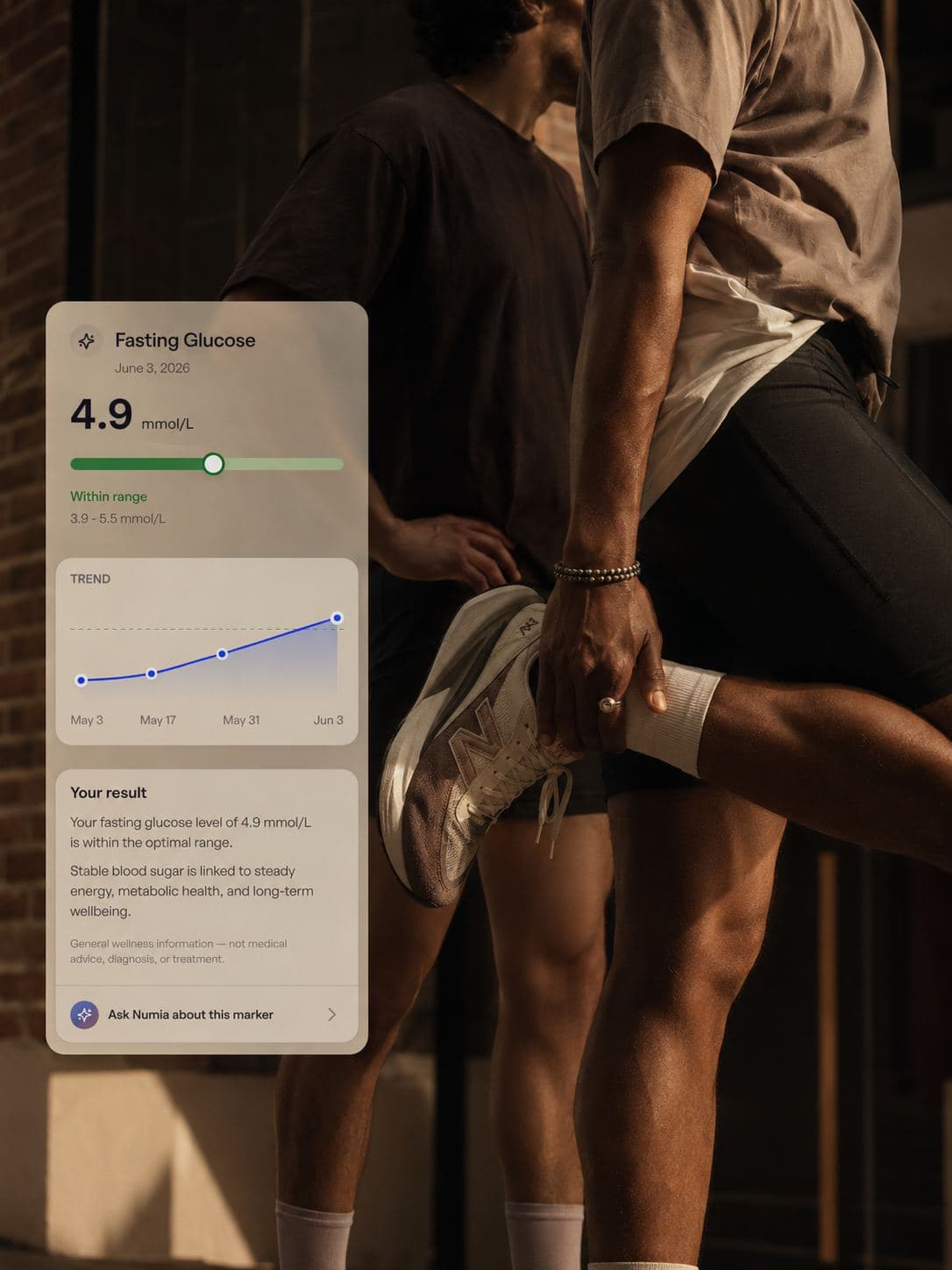
HbA1c and fasting glucose disagree because they measure different things: HbA1c averages your blood sugar over 2–3 months through sugar attached to red blood cells, while fasting glucose is one morning's reading. Anything that changes red cells, or the fast itself, can pull them apart.
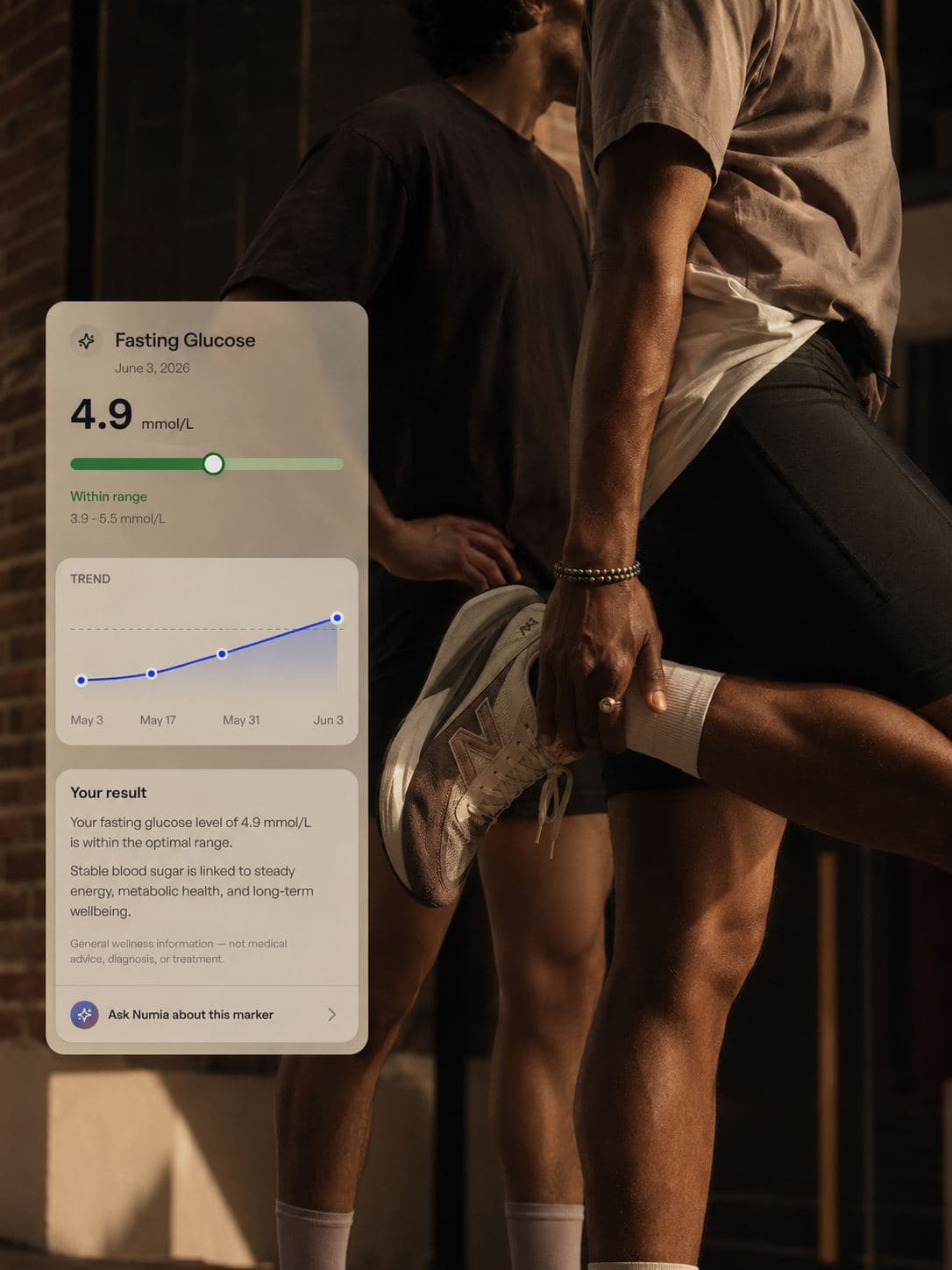
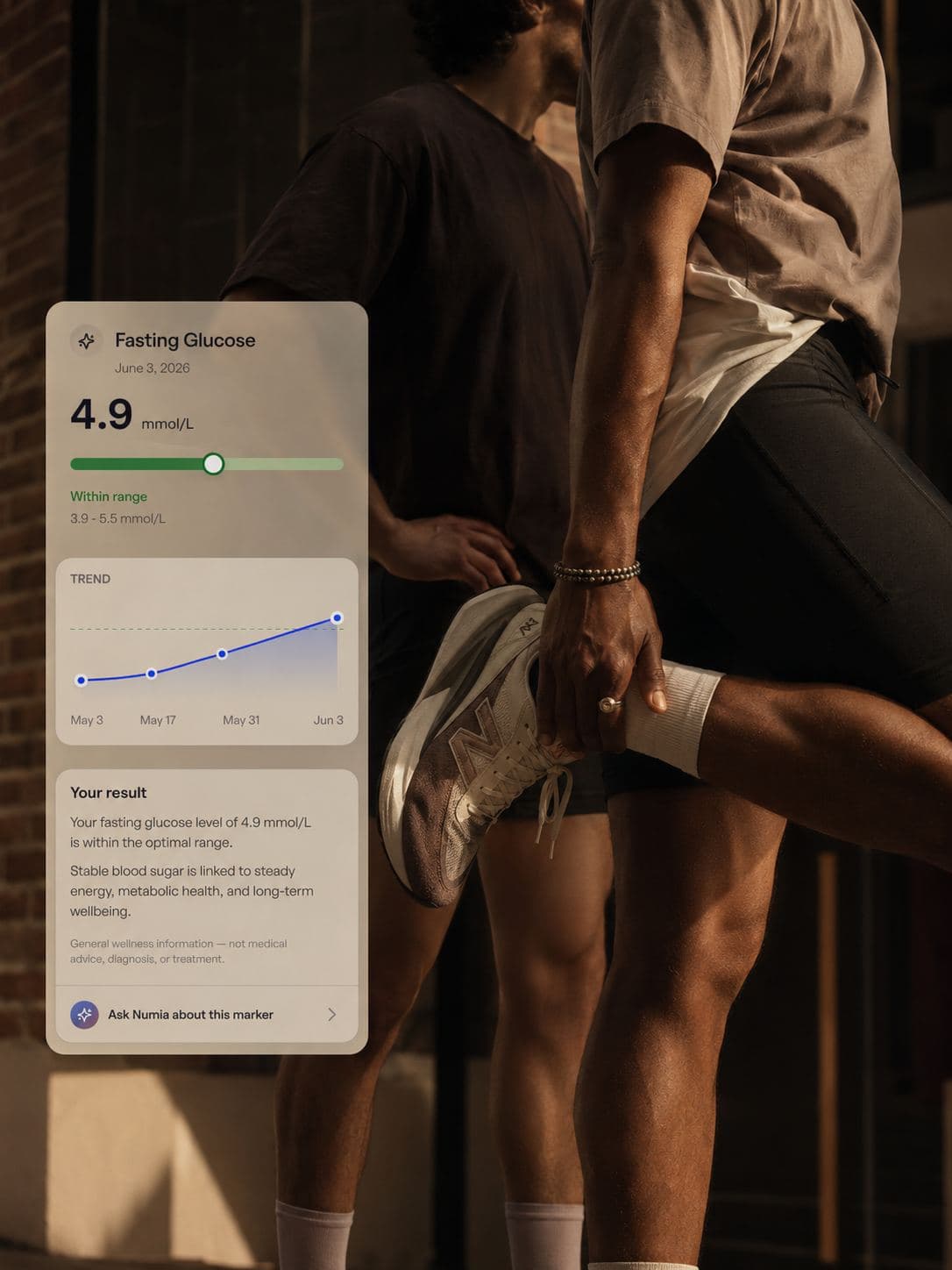
In Canada, prediabetes starts at a fasting glucose of 6.1 mmol/L or an HbA1c of 6.0%, and diabetes at 7.0 mmol/L or 6.5%. Numia's Fatigue Panel and Weight Loss Monitoring Panel both report the pair from the same draw.
Here's why the early range matters. In a US national survey, 84% of adults with prediabetes didn't know they had it, and a glucose test in the previous three years was the strongest predictor of knowing (Wang et al., 2025). Catching it gives you time to act: in the Diabetes Prevention Program, lifestyle changes cut new cases of type 2 diabetes by 58% over about three years in adults with raised blood sugar (Knowler et al., 2002).
What can push HbA1c and fasting glucose apart?
| What's going on | Effect | What helps sort it out |
|---|---|---|
| Iron deficiency, with or without anemia | HbA1c reads higher | Ferritin and iron studies (Fatigue Panel) |
| Other anemias, blood loss, transfusion | HbA1c unreliable | A CBC from your doctor |
| Severe kidney or liver disease | HbA1c may mislead | Creatinine and liver enzymes, on both panels |
| Older age; some ancestries | HbA1c runs higher at the same glucose | Context, not a test |
| Eating before the draw | Fasting glucose reads higher | An 8–12 hour fast (Fatigue Panel) |
Which result should you trust?
Diabetes Canada says that when the two disagree, you repeat the one above the diagnostic cut-off and base any diagnosis on the repeat. BC's Diabetes Care guideline agrees, and adds that without classic symptoms, a single diabetes-range result is confirmed on another day. Where red-cell turnover is altered, the American Diabetes Association favours glucose-based tests.
So what does this mean for you? A mismatch is a reason to retest the same way, not a verdict, and any diagnosis stays with your physician.
Why check iron next to HbA1c?
Iron deficiency can push HbA1c up on its own. A review of 12 studies found that iron deficiency, with or without anemia, raised HbA1c with no matching rise in glucose (English et al., 2015). In one small study of 50 people with iron-deficiency anemia and no diabetes, average HbA1c fell from 7.4% to 6.2% after three months of iron treatment (Coban et al., 2004).
Ferritin, the iron-stores test explained in our iron guide, sits on the same Numia Fatigue Panel report as HbA1c; the Weight Loss panel doesn't include it. Treatment is your clinician's call.
Where does Numia fit?
Numia Health, a physician-ordered, at-home blood testing service in Greater Vancouver, brings the usual separate steps into one place. A licensed Canadian physician approves your requisition online in about 3 minutes, and a BC-licensed clinician comes to your home for a 10-minute morning draw. Plain-English results reach the Numia app in 7 days, where the Numia Companion, an AI that has read them, answers questions. Out-of-range results are physician-reviewed with next steps, and an optional wellness consultation is available. Numia is an HSA-eligible service.
Frequently asked questions
Why would my HbA1c and fasting blood sugar disagree?
HbA1c averages 2–3 months and depends on red blood cells; fasting glucose is one morning. Iron deficiency, anemia, blood loss, age and ancestry shift HbA1c; an incomplete fast shifts glucose. Numia's Fatigue Panel reports both, plus iron.
Can low iron cause a high A1C?
Yes. Iron deficiency, even without anemia, can raise HbA1c without any change in blood sugar. A ferritin test shows whether stores are low; Numia's Fatigue Panel includes one. Treatment is your clinician's call.
Is HbA1c or fasting glucose more accurate?
Neither wins outright. Canadian and BC guidance say to repeat whichever result crossed the diagnostic line; with anemia or recent blood loss, US standards favour glucose tests. Numia reports both from one draw.
Sources11 references
- American Diabetes Association Professional Practice Committee for Diabetes. (2026). 2. Diagnosis and classification of diabetes: Standards of Care in Diabetes, 2026. Diabetes Care, 49(Suppl. 1), S27–S49. View source
- Coban, E., Ozdogan, M., & Timuragaoglu, A. (2004). Effect of iron deficiency anemia on the levels of hemoglobin A1c in nondiabetic patients. Acta Haematologica, 112, 126–128. View source
- English, E., Idris, I., Smith, G., Dhatariya, K., Kilpatrick, E. S., & John, W. G. (2015). The effect of anaemia and abnormalities of erythrocyte indices on HbA1c analysis: A systematic review. Diabetologia, 58(7), 1409–1421. View source
- Guidelines and Protocols Advisory Committee. (2021). Diabetes care (Rev. May 8, 2026). BC Guidelines. British Columbia Ministry of Health. View source
- Knowler, W. C., Barrett-Connor, E., Fowler, S. E., Hamman, R. F., Lachin, J. M., Walker, E. A., Nathan, D. M., & Diabetes Prevention Program Research Group. (2002). Reduction in the incidence of type 2 diabetes with lifestyle intervention or metformin. The New England Journal of Medicine, 346(6), 393–403. View source
- Numia Health. (n.d.). Fatigue Panel. Retrieved September 25, 2026, from View source
- Numia Health. (n.d.). Home page. Retrieved September 24, 2026, from View source
- Numia Health. (n.d.). Weight Loss Monitoring Panel. Retrieved September 25, 2026, from View source
- Punthakee, Z., Goldenberg, R., & Katz, P. (2018). Definition, classification and diagnosis of diabetes, prediabetes and metabolic syndrome. Canadian Journal of Diabetes, 42(Suppl. 1), S10–S15. View source
- Statistics Canada. (2010). Table 55: Distribution of the household population (fasted sub-sample) by the concentration of plasma glucose, by age and sex, Canada, 2007 to 2009. In Canadian Health Measures Survey: Cycle 1 data tables (Catalogue no. 82-623-X). View source
- Wang, L., Weng, X., Kraschnewski, J. L., & Pichardo-Lowden, A. R. (2025). Prediabetes awareness barriers and enablers: National Health and Nutrition Examination Survey 2011–2020. AJPM Focus, 4(5), 100378. View source
Last updated November 1, 2026